
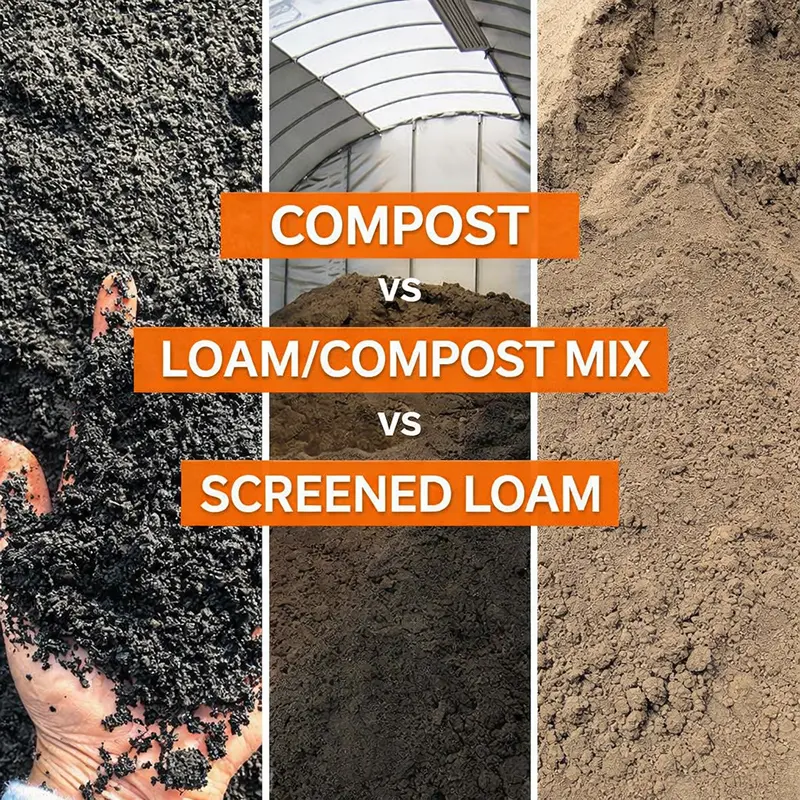
Choosing the right soil product can feel confusing, but here is the short answer: compost feeds your soil with nutrients, loam/compost mix gives you structure and nutrients together, and screened loam is a clean base for grading and starting lawns. Each one does a different job, and picking the right one will save you time, money, and frustration. Keep reading to learn exactly when and why to use each product.
What is compost and why does it matter?
Compost is made from broken-down organic materials like grass clippings and leaves. Over time, those materials decompose into a dark, rich, crumbly soil amendment that is packed with nutrients. Think of it like a vitamin supplement for your garden beds and lawn. At Southridge Farm & Nursery, the compost is made right here in Walpole from local organic materials, so you always know exactly what you are getting.
Compost does not replace your existing soil — it improves it. When you mix compost into your garden beds or top-dress your lawn, you are helping the soil hold water better, drain properly, and support healthy plant roots. Earthworms and good bacteria love compost too, which creates a healthy underground ecosystem. It is one of the best things you can do for tired, worn-out soil.
Here are some of the best ways to use compost:
- Mix it into existing garden beds before planting flowers or vegetables
- Spread a thin layer on top of your lawn in the spring or fall to improve grass growth
- Work it into the soil around trees and shrubs to give roots a nutrient boost
- Use it to improve heavy clay soils or sandy soils that do not hold moisture well

What is a loam/compost mix?
A loam/compost mix is exactly what it sounds like — a blend of loam soil and compost combined into one product. Loam is a balanced mix of sand, silt, and clay that gives soil a good texture and structure. When you add compost to loam, you get all of that structure plus a powerful dose of nutrients. It is ready to go right out of the bag, which makes it a favorite for homeowners who want results fast.
This blend is the best choice when you are starting something from scratch, like building a new garden bed or filling a raised bed. The loam gives your plants something solid to root into, while the compost feeds them right away. You do not have to do any extra mixing or guesswork. Just fill your bed, plant, water, and watch things grow.
Best uses for loam/compost mix: New garden beds, raised beds, container gardens, filling in uneven spots that also need to support plant growth, and general planting areas where you want immediate results.

What is Screened Loam?
Screened loam is natural loam soil that has been run through a screen to filter out rocks, roots, and any large debris. At Southridge Farm & Nursery, screened loam is filtered down to a half-inch size, which means the material is clean, smooth, and easy to work with. It is not full of nutrients like compost, but that is not its job. Screened loam is all about giving you a solid, level base.
If you are grading your yard, leveling a low spot, or preparing the ground before you lay down grass seed, screened loam is your go-to product. It spreads evenly, compacts nicely, and gives you that smooth surface you need before you start planting. You can always add compost on top later to boost nutrients once the grading work is done.
Here is when to reach for screened loam:
- Grading and leveling low or uneven areas in your yard
- Creating a base layer before seeding a new lawn
- Filling in ruts or holes left behind by construction or heavy equipment
- Building up the soil level around a foundation or along a slope
- Topping off areas where soil has washed away after heavy rain

How are these three products different from each other?
Here is the simplest way to think about it: compost is food for your soil, screened loam is the foundation, and a loam/compost mix is the perfect combination of both. They all have a place in a healthy yard or garden, but they each do a very different job. Using the wrong product for the job — like using only compost to grade a yard — can lead to a soft, spongy surface that does not hold up well.
Screened loam has very few nutrients on its own, but it is dense and stable. Compost is nutrient-rich but too loose and spongy to use alone for grading or lawn prep. The loam/compost blend sits right in the middle — it is structured enough to fill and build, and rich enough to grow plants immediately. Knowing which situation you are in will help you choose the right product every single time.
Quick comparison at a glance. Compost — nutrient-rich, best for improving existing soil. Loam/compost mix — ready-to-plant blend of structure and nutrition. Screened loam — clean, smooth base for grading and new lawns.
Can you use more than one product on the same project?
Absolutely — and in many cases, you should. A great example is a new lawn project. You might start by laying down screened loam to level and grade the area, and then top it with a thin layer of compost before spreading your grass seed. That gives you the firm, even surface from the loam and the nutrient boost from the compost. Using both products together means your new grass gets the best possible start.
For garden beds, you might also build them with a loam/compost mix and then add a thin layer of pure compost every spring to replenish nutrients as the growing season begins. Layering your soil products like this is a smart, affordable way to keep your yard and garden healthy year after year. The team at Southridge Farm & Nursery is always happy to help you figure out the right combination for your specific project.
How much do you need for your project?
Figuring out how much material to order is easier than it sounds. For most garden bed improvements, a two- to three-inch layer of compost worked into the top six inches of soil is a great starting point. For a new raised bed, filling it entirely with a loam/compost mix gives your plants everything they need right from the start. For grading or lawn prep with screened loam, plan on at least four to six inches of material in areas that need significant leveling.
All three products are available in bulk at Southridge Farm & Nursery, which makes it easy and affordable to order exactly the right amount for your project size. Delivery is available for larger orders so you do not have to worry about hauling heavy material yourself. Just reach out and the team will help you calculate how much you need based on the square footage and depth of your project.
Why buy local from Southridge Farm & Nursery?
When you buy soil products from a local farm and nursery, you know exactly where your materials are coming from. Southridge Farm & Nursery produces its own compost and screened loam right here in Walpole, MA, using locally sourced organic materials. That means the quality is consistent, the products are fresh, and there are no mystery fillers or unknown ingredients mixed in. You are supporting a local, family-owned business that has been serving the community since 2004.
Tips for getting the best results from any soil product
No matter which product you choose, a few good habits will go a long way toward getting great results in your yard or garden. Always start with a plan — know what you are trying to accomplish before you order. Are you planting, grading, or improving? That one question will point you toward the right product almost every time.
- Test your existing soil before you start — it helps you know what is already there
- Work compost into the top several inches of soil rather than just leaving it on top
- Water thoroughly after spreading any new soil product to help it settle
- Add a fresh layer of compost each spring to keep garden beds healthy over time
- When grading with screened loam, compact it lightly so it does not shift after the first rain
Conclusion: choose the right soil, grow better results
Compost, loam/compost mix, and screened loam each have a unique role to play in creating a healthy, beautiful yard. Compost feeds and improves your existing soil. Screened loam gives you a clean, stable base for grading and new lawns. And a loam/compost mix gives you the best of both worlds when you are starting a new planting area. Understanding these differences means you will spend less money, do less guesswork, and see better results from every project you take on.
At Southridge Farm & Nursery in Walpole, MA, we are here to make sure you always get the right product for the job. Stop by, give us a call, or order online — and let us help you grow something great this season.
Still not sure which product is right for your project? Reach out to the team at Southridge Farm & Nursery — we are happy to help you choose and get your order on the way.
Frequently Asked Questions
What Is the Difference Between Topsoil and Screened Loam?
Screened loam is a fancy type of topsoil. It has been sifted so it has no big rocks or clumps. Plain topsoil might be lumpy or rocky. This makes it harder to use for flattening out your yard. Always look for screened dirt for a smooth finish.
Can I Plant Seeds Directly Into Pure Compost?
Most plants do not like growing in just compost. It is too rich for their little roots. The compost might actually burn the plants. It is best to mix it with other dirt. Use our special blend to keep your plants very safe and happy.
Do You Deliver Soil to My House?
Yes, Southridge Farm & Nursery brings dirt right to your driveway! You do not need a big truck to get what you need. We deliver all over Walpole and surrounding towns. Ordering delivery is very simple on our website. It is the easiest way to start your outdoor project.
How Do I Choose Between Screened Loam and the Blend for a Lawn?
If you are just filling holes or making the ground flat, choose screened loam. It is perfect for leveling things out. If you are planting new grass seeds, use the loam/compost mix. The extra food helps the tiny seeds grow strong and green. Picking the right one makes growing grass much easier.