
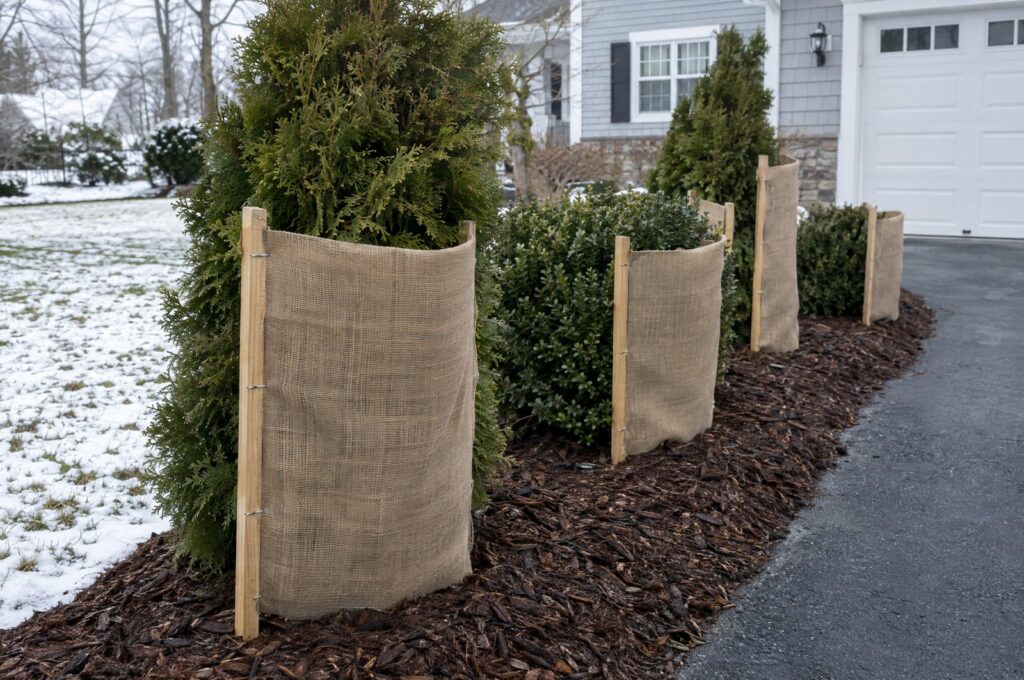
To winterize your garden, water deeply until the ground freezes, spread about 3 inches of mulch once the soil is frozen, and shield tender shrubs with burlap. These three steps protect roots, keep evergreens from drying out, and block wind and road salt. Most of this work happens in late fall, after the leaves drop. Here’s how to do each step the right way.
Winterize Your Garden by Watering Before the Ground Freezes
Water comes first when you get plants ready for winter. Evergreens keep losing water through their leaves and needles all winter long. Once the ground freezes, their roots can’t pull up more water, and the leaves can turn brown. Cornell Cooperative Extension suggests watering well through October and into November if you don’t get steady rain.
This matters most for trees and shrubs planted in the last three or four years. Their roots are still small, so they dry out faster. Give each plant a slow, deep soak instead of a quick spray. Keep going until the ground starts to freeze.

Add Winter Mulch After the Ground Freezes
Winter mulch is a layer of mulch added on top of your beds to keep the soil frozen. That sounds odd, but frozen soil is not the problem. The problem is soil that freezes and thaws again and again, which can push new plants right out of the ground. A layer of mulch keeps the ground at a steady temperature.
Wait until the ground is frozen, then spread about 3 inches of mulch over the root area. Mulching too early can give mice and voles a warm place to nest near your plants. Keep mulch a few inches away from tree trunks and shrub stems, which is one of the mulch mistakes we see most. At Southridge Farm & Nursery, we make all of our mulch right here on site, and our guide to matching mulch types to your garden beds can help you pick one.
How to Protect Plants in Winter With Burlap
Burlap protects evergreens from drying winter wind, strong sun, and salt spray from the road. Cornell Cooperative Extension says to set burlap up as a screen in front of the plant instead of wrapping it all the way around. Put two or three stakes in the ground on the windy side, the sunny side, or the side that faces the road. Then staple burlap to the stakes so it stands a few inches away from the branches.
Burlap screens are a big help near driveways and sidewalks, where salty snow gets thrown onto plants. Try not to pile salty snow on your garden beds. In spring, give those beds a heavy watering to help wash salt out of the soil.
Heavy, wet snow can also bend or break branches. Gently brush snow off shrubs before it freezes solid, and loosely tie upright shrubs like arborvitae with soft twine so they hold their shape. Anti-drying sprays are sold for evergreens, but Cornell notes they offer limited help on their own. Water and burlap do more of the work.
Conclusion
To winterize your garden, water deeply until the ground freezes, add about 3 inches of mulch once the soil is frozen, and screen tender evergreens with burlap. Keep salty snow off your beds and brush heavy snow off branches. These simple steps help your plants come through winter in good shape. For more fall tips, see our post on fall gardening mistakes to avoid. If you need mulch or new shrubs, visit our plant nursery or contact our team.